Accounts Payable
Automation That
Actually Works
Stop drowning in paper invoices. Automate your entire AP process from receipt to payment — cut processing costs by up to 80%, eliminate errors, and give your finance team hours back every week.

Trusted by finance teams in every major industry
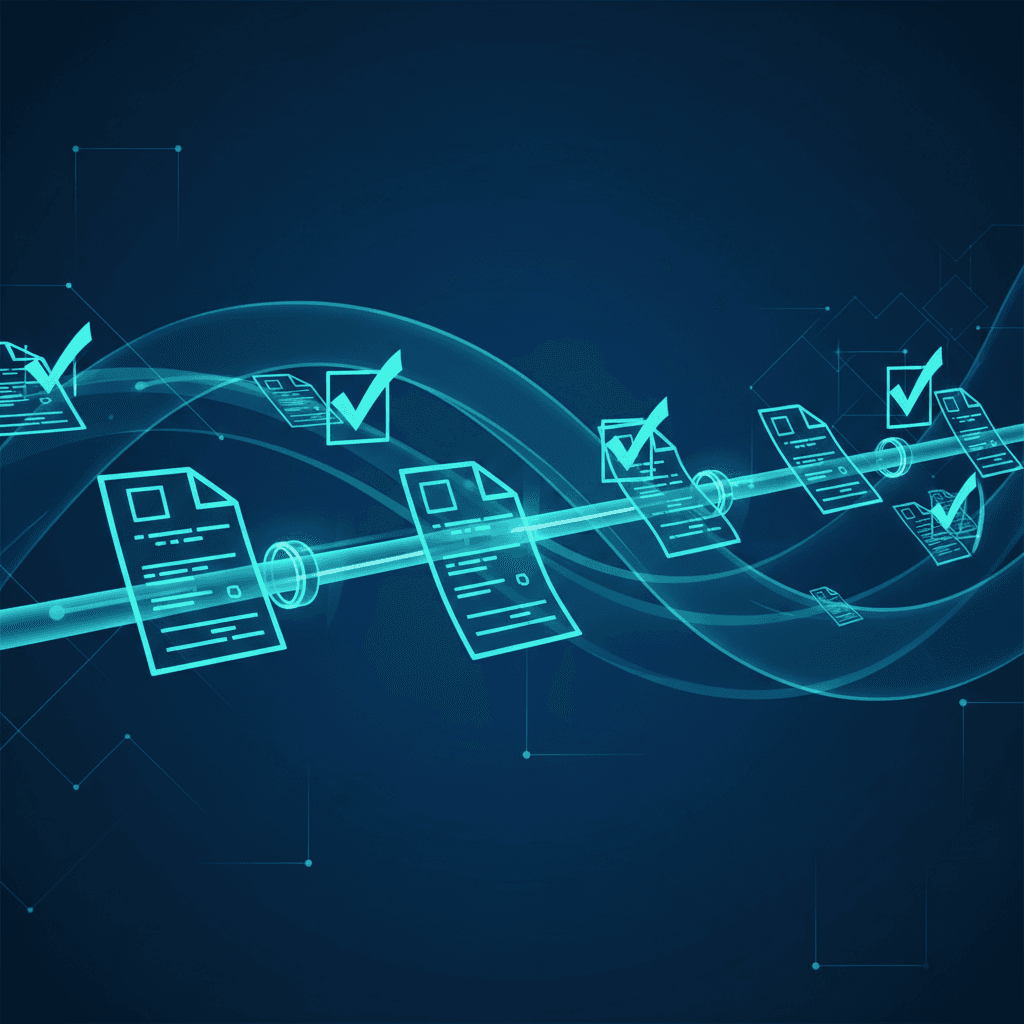
Understanding AP Automation
What Is Accounts Payable Automation?
Accounts payable automation is the use of technology to handle the end-to-end process of receiving, validating, approving, and paying vendor invoices — without manual data entry or paper-based workflows.
Traditional AP teams spend enormous time on low-value tasks: keying invoice data, chasing approvals via email, reconciling discrepancies, and filing paper documents. AP automation eliminates this friction by combining optical character recognition (OCR), intelligent data extraction, workflow automation, and ERP integration.
The result: invoices that used to take 10-12 days to process now complete in hours — with higher accuracy, full audit trails, and zero paper to manage.
End-to-End Workflow
The Automated AP Process — Step by Step
From invoice receipt to payment confirmation, every step is handled automatically — with humans in the loop only when exceptions require judgment.
Invoice Capture
Invoices arrive by email, EDI, supplier portal, or scan. OCR and AI extract all key fields automatically.
Data Validation
Extracted data is validated against vendor master records and business rules. Duplicates and anomalies flagged automatically.
3-Way Matching
Invoice is matched against the purchase order and goods receipt. Discrepancies trigger exception workflows — not manual searches.
Approval Routing
Rules-based workflows route invoices to the right approvers automatically. Mobile approvals, escalations, and reminders built in.
Payment Execution
Approved invoices are batched and paid via ACH, wire, virtual card, or check — synced back to your ERP in real time.
Why Automate
The Business Case for AP Automation
Finance executives who have implemented AP automation consistently report the same five outcomes. Here's what you can expect.
Dramatic Time Savings
AP staff spend up to 60% of their time on manual data entry and chasing approvals. Automation eliminates this entirely, freeing your team for strategic work like vendor negotiations and cash flow forecasting.
Major Cost Reduction
Manual invoice processing costs $15–$40 per invoice on average. Automation reduces this to $2–$5 — a 75–87% reduction. For a company processing 1,000 invoices monthly, that's $150K+ in annual savings.
Near-Zero Error Rates
Human data entry errors — wrong amounts, duplicate payments, missed early payment discounts — cost businesses billions annually. AI-powered extraction and 3-way matching catches discrepancies before they become problems.
Audit-Ready Compliance
Every action, approval, and exception is logged with timestamps and user details — automatically. SOX compliance, internal audits, and vendor disputes become straightforward rather than labor-intensive.
Real-Time Cash Visibility
Know exactly what you owe, what's pending approval, and what payments are scheduled — at any moment. Better cash flow visibility enables smarter decisions on early payment discounts, dynamic discounting, and working capital.
Scalable Without Headcount
Manual AP scales linearly — more invoices means more staff. Automated AP scales horizontally — your system handles 10x invoice volume with the same team. Grow your business without growing your AP department.
Platform Capabilities
Every AP Function. Fully Automated.
A complete accounts payable automation platform covers every touchpoint in the invoice lifecycle — from capture to reconciliation.
Intelligent Invoice Processing
AI-powered capture from any source
Advanced OCR and machine learning extract data from invoices regardless of format — PDF, image, EDI, XML, or paper scan. The system learns your vendor templates over time, achieving 95%+ extraction accuracy from day one.
- Multi-format support (PDF, image, email, EDI)
- Automated vendor recognition and header matching
- Line-item extraction and coding suggestions
- Duplicate invoice detection
- Exception flagging with confidence scores
3-Way PO Matching
Automated reconciliation across invoice, PO, and receipt
Automatically match invoices against purchase orders and goods receipts. Configurable tolerance thresholds allow minor variances to auto-approve, while material discrepancies route to the right resolver with full context.
- 2-way, 3-way, and 4-way matching support
- Configurable matching tolerance rules
- Partial invoice and receipt matching
- Automatic discrepancy routing with context
- Supplier portal for dispute resolution
Dynamic Approval Workflows
Rules-driven routing with mobile approval
Configure approval rules based on amount, cost center, vendor category, or any custom field. Approvers receive instant notifications and can approve from any device — no more waiting on paper routing or email threads.
- Multi-level approval chains
- Delegation and out-of-office handling
- Automated escalation on SLA breach
- Mobile approval via email or app
- Full approval history and audit log
Real-Time AP Analytics
Complete financial visibility across your payables
Live dashboards give finance leadership complete visibility into AP performance — invoice aging, bottlenecks, early payment discount capture rates, and cash flow projections. All the data needed for month-end close in minutes, not days.
- Invoice aging and bottleneck identification
- Early payment discount capture tracking
- Cash flow and DPO forecasting
- Vendor spend analytics
- CFO-ready reporting dashboards
Automated Payment Execution
Approved invoices automatically batch for payment on the optimal date — capturing early payment discounts while preserving cash flow. Supports ACH, wire transfer, virtual card, and check — with real-time status updates and ERP sync.
- ACH, wire, virtual card, and check support
- Dynamic discounting and early payment optimization
- Vendor self-service payment status portal
- Real-time ERP and GL synchronization
- Bank-grade security with fraud prevention

Industry Applications
AP Automation Across Every Industry
Accounts payable automation delivers measurable results in every sector — though the specific gains vary by industry context.
Healthcare & Life Sciences
The Challenge
Complex vendor networks, strict compliance requirements, and high invoice volumes across multiple facilities.
The Result
Automated compliance controls, consolidated multi-entity AP, and streamlined payment to thousands of suppliers.
Manufacturing
The Challenge
High-volume PO-based procurement, complex 3-way matching, and tight supplier relationship management.
The Result
Touchless PO invoice processing, exception-only workflows, and dynamic discounting that strengthens supplier terms.
Retail & E-Commerce
The Challenge
Seasonal invoice spikes, diverse supplier base, and thin margins where AP errors have outsized impact.
The Result
Scalable processing that handles seasonal peaks without additional staff, with full spend visibility by SKU and category.
Financial Services
The Challenge
Stringent regulatory requirements, audit readiness, and zero tolerance for payment errors.
The Result
SOX-compliant workflows with complete audit trails, segregation of duties enforcement, and real-time GL posting.
Technology
The Challenge
Fast growth, distributed teams, and a mix of SaaS subscriptions, hardware, and professional services invoices.
The Result
Multi-entity consolidation, remote approval workflows, and automated accruals for subscription billing.
Government & Education
The Challenge
Budget controls, appropriations management, public accountability, and procurement compliance.
The Result
Budget encumbrance integration, public audit transparency, and compliance with government procurement regulations.
Integrates With Your Existing Systems
Connect to your ERP, procurement, and banking systems in days — not months.
Common Questions
Frequently Asked Questions
Everything finance leaders need to know before evaluating AP automation solutions.
What is accounts payable automation and how does it work?
Accounts payable automation uses technology — primarily OCR, AI, and workflow software — to handle the complete invoice lifecycle from receipt through payment without manual data entry. When an invoice arrives (by email, EDI, or scan), the system automatically extracts the data, validates it against your vendor master and purchase orders, routes it through your approval workflow, and schedules payment. Finance staff are only involved when an exception requires human judgment.
How much does AP automation typically cost?
AP automation pricing varies widely by vendor and deployment model, ranging from $25,000 to $200,000+ annually for enterprise solutions. However, the ROI calculation is straightforward: if you're processing 500+ invoices per month at $15–$40 each, you're spending $7,500–$20,000 monthly on AP labor alone. Most organizations see full payback within 6–18 months of implementation.
How long does AP automation implementation take?
Implementation timelines range from 6–8 weeks for mid-market organizations to 6+ months for large enterprises with complex multi-entity environments and custom ERP integrations. Cloud-based solutions typically deploy faster than on-premise. The most time-consuming phases are ERP integration, approval workflow configuration, and end-user training.
What ERP and accounting systems does AP automation integrate with?
Modern AP automation platforms offer pre-built connectors for major ERPs including SAP, Oracle, NetSuite, Microsoft Dynamics, Workday, Sage, QuickBooks, and dozens of others. Custom integration via API is available for proprietary systems. Ask vendors specifically about bi-directional sync — it's critical that approved invoices and payment confirmations post back to your GL in real time.
What types of invoices can AP automation handle?
AP automation can handle virtually any invoice format: PDFs (both text-based and scanned), email-attached documents, EDI transactions, XML data files, supplier portal submissions, and even physical paper invoices that are scanned. The AI extraction layer learns each vendor's invoice template over time, improving accuracy with each processed invoice.
How does 3-way matching work in AP automation?
3-way matching compares three documents: the vendor invoice, the purchase order (PO), and the goods receipt (proof of delivery). The AP automation system pulls all three documents electronically, compares key fields (quantities, unit prices, totals, line items), and either auto-approves matching invoices or routes discrepancies to the appropriate resolver with full context. This eliminates overpayments and ensures you're only paying for what was ordered and received.
Is AP automation secure and compliant with financial regulations?
Enterprise AP automation platforms are built with financial compliance as a core requirement. Standard security features include SOC 2 Type II certification, encryption at rest and in transit, role-based access controls, and complete audit trails for every action. For regulated industries, platforms offer SOX compliance controls, HIPAA-compliant data handling, and support for segregation of duties requirements. Always verify a vendor's compliance certifications match your industry requirements.
Can AP automation handle non-PO invoices?
Yes — non-PO invoices (sometimes called 'expense invoices' or 'direct buy invoices') are common for services, utilities, and one-time purchases where no purchase order exists. AP automation handles these through GL-code-based routing rather than PO matching. The system can suggest GL coding based on vendor history and invoice content, then route to the appropriate approver based on GL code and amount thresholds.
What is the typical ROI from implementing AP automation?
Based on industry benchmarks, organizations report: 75–87% reduction in per-invoice processing cost, 60–80% reduction in AP staff time on routine tasks, 95%+ reduction in data entry errors, and 50–70% improvement in early payment discount capture. A mid-size company processing 1,000 invoices per month can realistically save $150,000–$300,000 annually in direct AP costs, plus additional gains from eliminated duplicate payments and captured early payment discounts.
How do I build the business case for AP automation to get CFO approval?
The most effective CFO business cases combine three elements: (1) a hard cost calculation — current invoice volume × average cost per invoice minus projected automated cost per invoice × 12 months; (2) soft benefits quantification — FTE time reallocation to strategic work, late fee elimination, early discount capture; and (3) risk reduction value — estimated duplicate payment prevention and compliance audit cost avoidance. Request a diagnostic assessment from vendors — most will provide a benchmark analysis of your current AP performance against industry peers at no cost.
Get Started
Ready to Transform Your AP Process?
Tell us about your current AP challenges and invoice volume. We'll connect you with the right automation solution for your organization size and ERP environment.